
What Is My Home Worth in Winnipeg? How Value Is Really Determined
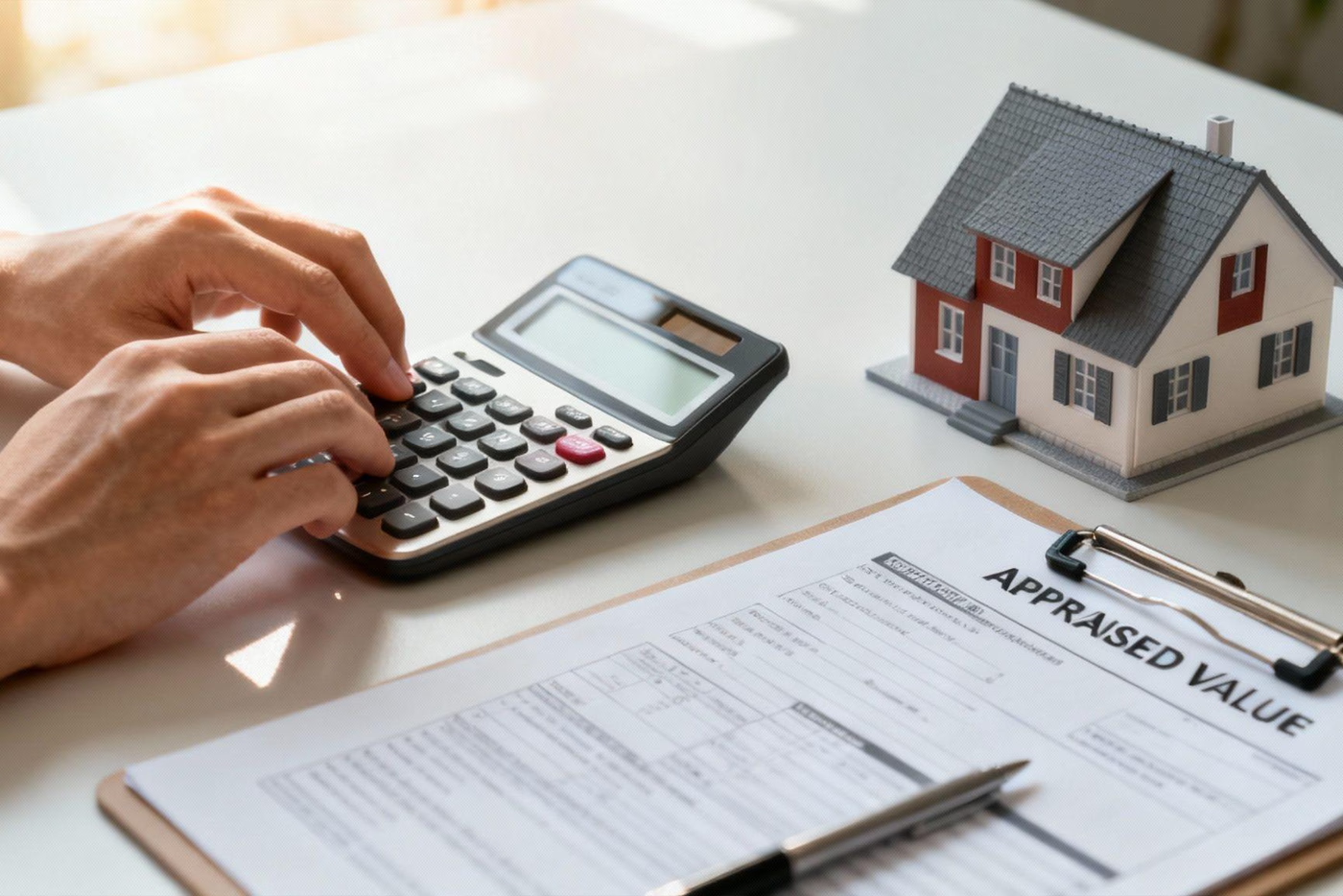
It is the first question almost every seller asks me, and it is the right one to start with. Before you decide to list, before you pick a moving date, before you even think about staging, you want to know one thing: what is my home actually worth? The honest answer is that your home is worth what a ready, willing, and able buyer will pay for it in today's market. Getting to that number takes a bit more than typing your address into a website, but it is not complicated once you understand the pieces.
I have walked through hundreds of homes across Winnipeg and the surrounding towns, and I can tell you that two houses with the same square footage on the same street can be worth noticeably different amounts. One has an updated kitchen and a newer roof, the other has original everything and a furnace on its last legs. The market sees that difference even when a quick online estimate does not. Here is how value is really put together, and why the number you may already have in your head could be off in either direction.
Market value is not the same as your assessed value
This is the single biggest source of confusion, so let us clear it up first. The assessed value printed on your City of Winnipeg tax statement is not your selling price. The City assesses property for one purpose, to divide up property taxes fairly among all owners, and it does this on a two year cycle using a reference date that is set well in the past.
For the 2027 general assessment, for example, the reference date is April 1, 2025. That means the assessed figure reflects what your property would have sold for back then, not what it will fetch when you list today. The City explains this openly on its property assessment page, where it describes assessing property at its market value as of that fixed reference date.
Because of that built in lag, your assessment can sit well below or above what the current market will bear, depending on how prices have moved since the reference date. In a rising market, assessments often trail actual sale prices. In a flat or softening stretch, they can look high. Either way, it is a useful data point and a starting reference, but it is not a listing price, and pricing your home off your tax assessment is a common and costly mistake.
What actually drives your home's value
When I prepare a value for a home, I am weighing a handful of things that buyers genuinely care about and pay for. None of these work in isolation, they combine, but each one moves the needle.
Location and neighbourhood
The same floor plan is priced differently in Charleswood than in Transcona or out in a growing town like Niverville. Schools, commute times, proximity to amenities, and the general character and desirability of the street all factor in. Even within a single neighbourhood, a quiet crescent can command more than a spot on a busy through street.
Lot and setting
Lot size and shape, orientation, mature trees, whether you back onto green space or a lane, a pie shaped lot versus a narrow one, all of this affects value. A larger or more private lot is a real asset that buyers will pay for.
Size and layout
Above grade square footage, the number of bedrooms and bathrooms, and whether the layout feels functional to a modern buyer all matter. Two homes with identical square footage can feel very different if one has an awkward, chopped up floor plan and the other is open and practical.
Condition and updates
This is where the online estimates fall apart. A newer roof, windows, furnace, and updated kitchens and bathrooms carry real weight. So does deferred maintenance, in the other direction. Buyers mentally tally up what they will have to spend, and they adjust their offer accordingly.
The market right now
Interest rates, how much competing inventory is out there, and even the season all affect what buyers will offer this month. The very same home can be worth more in a busy spring market with low inventory than in a quiet, well supplied stretch.
Why online estimates miss the mark
Automated home value tools are fine for a rough gut check, and I understand the appeal of an instant number. But they work off public data and broad averages. They do not know that you gutted the kitchen last year, or that your basement takes water every spring, or that the comparable sale they leaned on down the block was actually a private family deal at a discount.
They also cannot see condition, which is often the biggest single variable. That is why two homes an algorithm calls identical can be tens of thousands of dollars apart in reality. Treat those instant estimates as a very loose ballpark, not a listing price, and never make a real decision based on one alone.
The reliable way to get your number: a comparative market analysis
The tool I actually use is a comparative market analysis, or CMA. I look at what genuinely similar homes near you have sold for recently, not what they were listed at, and then I adjust up or down for the differences between those homes and yours. Recent sold data is the closest thing there is to reading the market's mind, because it reflects what real buyers actually paid, not what hopeful sellers asked.
To build a good CMA, I look for recent sales in your immediate area that match your home on the things that matter, then make careful adjustments. If a comparable had a finished basement and yours does not, I account for it. If yours has a double garage and the comparable had a single, I account for that too. You can see the broader trend behind all of this in the Winnipeg Regional Real Estate Board's monthly market statistics, which track average prices and how long homes are taking to sell across the region and by area.
A CMA is different from a formal appraisal. An appraisal is a paid report from an accredited appraiser that a lender relies on to approve a mortgage. A CMA is a pricing opinion from someone who sells in your area every week and knows what buyers are responding to right now. For the purpose of deciding your list price, the CMA is usually exactly what you want.
How to get an accurate number for your specific home
If you want a real figure rather than a guess, that is exactly what a home evaluation gives you. I come through, look at the things a screen simply cannot see, pull the right comparables, and give you an honest range along with a clear explanation of what I would do to reach the top of it. There is no cost and no obligation, and you are under no pressure to list.
Come to the meeting ready to help me help you. Make a quick list of the upgrades you have done and roughly when, since a new furnace or roof is not always obvious at a glance. Mention anything a buyer would eventually discover, because it is better factored into the number now than negotiated later. If you are still in the early research stage, browsing current Winnipeg listings and reading how I approach pricing a home to sell will give you a good feel for the market before we ever sit down.
Frequently asked questions about home value in Winnipeg
Is my property assessment the same as my home's market value?
No. Your City of Winnipeg assessment is based on a reference date set about two years in the past and is used to calculate property taxes, not to set a sale price. Market value is what a buyer will pay today, which can be higher or lower than your assessment.
How accurate are online home value estimates?
They are a rough ballpark at best. Automated tools work off averages and public data, and they cannot see your home's condition, your updates, or your specific location advantages. Use them for a loose idea, never as a listing price.
Do I need a paid appraisal to know what my home is worth?
Usually not, for the purpose of setting your list price. A free comparative market analysis from a local agent is the right tool for that. A formal appraisal is typically ordered later by a buyer's lender.
How recent should my home value be if I am planning to sell?
The market shifts through the year, so if you are actively planning to sell, a value from within the last month or two is ideal. A figure that is six months or a year old can be well off in a moving market.
Your value is the foundation for every other decision
Knowing your number is not just about satisfying curiosity. It is the foundation for deciding whether to sell now or wait, for estimating what you would walk away with after costs, and for planning your next move with confidence. Get that number right, grounded in real comparable sales rather than a tax figure or an online guess, and every other part of the sale gets easier. When you are ready for an honest, no pressure read on what your home would sell for today, reach out and I will put the numbers together for you.
...