
Preparing Your Winnipeg Home for Winter: A Seasonal Checklist
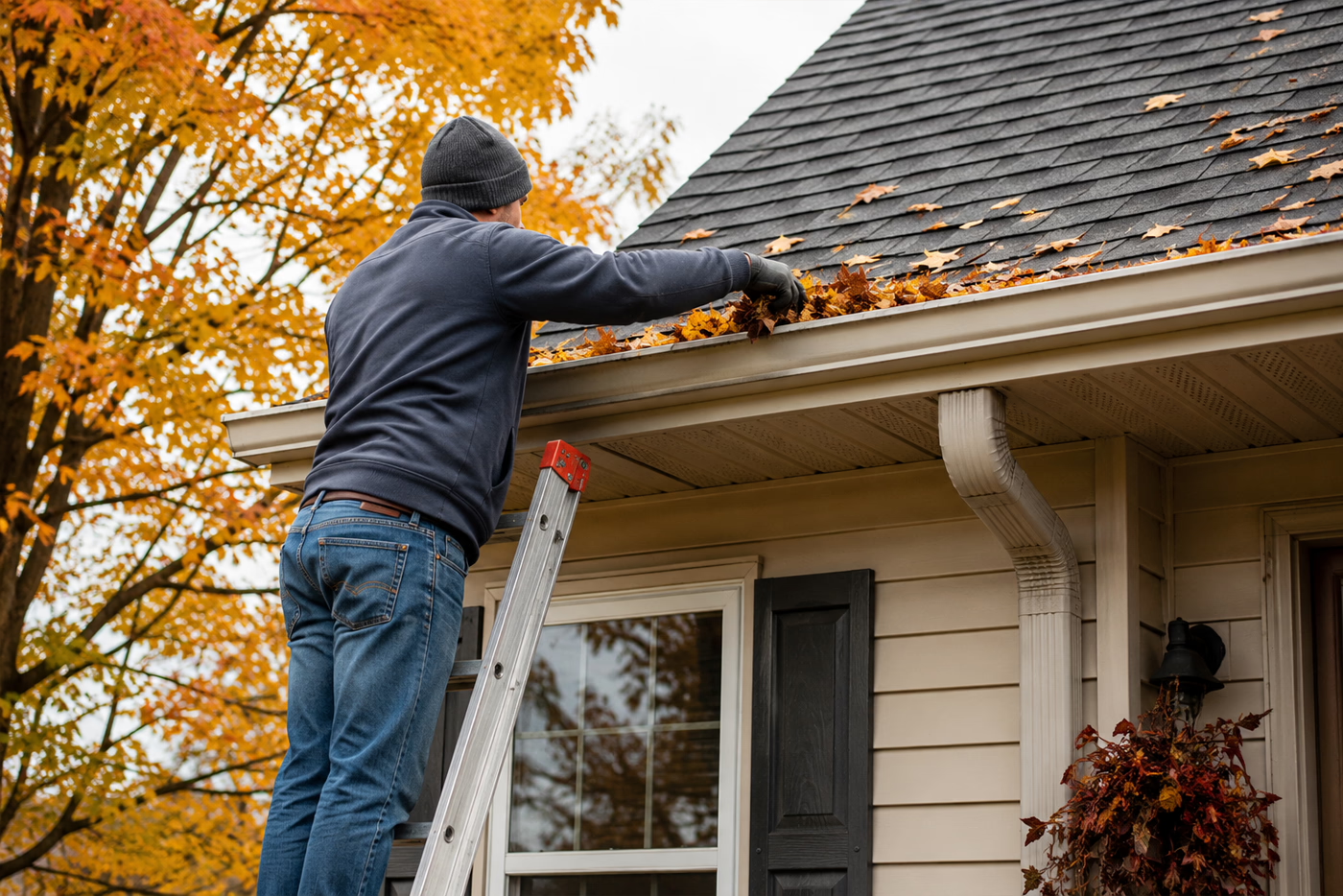
If you've lived through even one Manitoba winter, you already know it's no joke. Temperatures regularly drop below -30°C, and a cold snap can expose every weak point in your home. The good news is that most winter problems are preventable if you put in some work before the first freeze hits.
I've seen what happens when homeowners skip their fall prep. Burst pipes, ice dams, sky-high heating bills, furnaces that quit on the coldest night of the year. None of that is fun, and most of it is avoidable.
Here's a practical checklist to get your Winnipeg or Manitoba home through winter without any nasty surprises.
When should you get your furnace serviced?
This is the single most important thing on the list. Your furnace works harder here than almost anywhere else in Canada, and it needs annual professional maintenance to keep running safely and efficiently.
Book a furnace inspection and tune-up in September or early October, before the HVAC companies get slammed with emergency calls. A technician will check the heat exchanger, clean the burners, inspect the blower motor, and make sure everything is operating properly.
While you're at it, replace your furnace filter. A dirty filter forces the system to work harder, which drives up your energy bills and shortens the life of your furnace. During the winter months, check your filter every 4 to 6 weeks and swap it out when it looks dirty.
If your furnace is more than 15 to 20 years old, it's worth having a conversation about replacement before it fails on you mid-January. Newer high-efficiency models can cut your heating costs significantly. Manitoba Hydro offers rebates and financing programs for energy-efficient heating upgrades that can offset some of the cost.
How do you prevent frozen pipes in a Manitoba home?
Frozen pipes are one of the most common and most expensive winter problems in Manitoba homes. When water freezes inside a pipe, it expands and can split the pipe wide open. The damage doesn't show up until the ice thaws, and by then you could be dealing with serious flooding.
Here's what to do:
- Insulate exposed pipes in unheated areas like the garage, crawl space, and basement. Foam pipe insulation is cheap and easy to install.
- Disconnect and drain outdoor hoses. Shut off the interior valve that feeds your outdoor faucets and open the outdoor tap to let any remaining water drain out.
- Know where your main water shut-off valve is. If a pipe does burst, being able to shut off the water quickly can save you thousands in damage.
- If you're leaving town, don't set your thermostat below 15°C. Better yet, have someone check on the house every day or two.
How do you seal drafts around windows and doors?
Start by feeling for cold air around window frames, door frames, exterior-wall outlets, and anywhere pipes or wires enter the house. Apply weatherstripping around doors and windows, caulk gaps around frames and trim, install foam gaskets behind outlet covers on exterior walls, and add door sweeps to exterior doors with a gap at the bottom. For especially drafty older windows, interior window insulation kits noticeably reduce heat loss as a temporary fix.
Heat loss through gaps around windows and doors is one of the biggest energy wasters in older Manitoba homes. Even newer homes can develop gaps as materials expand and contract with temperature changes.
For quick fixes:
- Apply weatherstripping around doors and windows
- Use caulk to seal gaps around window frames and trim
- Install foam gaskets behind outlet and switch covers on exterior walls
- Use door sweeps on any exterior doors that have a gap at the bottom
For older windows that are especially drafty, interior window insulation kits (the plastic film kind you shrink with a hair dryer) actually work surprisingly well as a temporary measure. They're not pretty, but they can noticeably reduce heat loss and condensation.
What should you check on your roof and attic before winter?
Before the snow arrives, inspect your roof for missing, cracked, or curling shingles, damaged flashing around vents and chimneys, and clogged gutters. Clean gutters and make sure downspouts direct water 4 to 6 feet from the foundation. In the attic, confirm you have enough insulation — R-50 to R-60 is the recommended level for our climate zone, and if you can see the tops of the ceiling joists, you almost certainly need more.
Your roof takes a beating in a Manitoba winter. Before the snow arrives, do a visual inspection or hire a professional to check for:
- Missing, cracked, or curling shingles
- Damaged or deteriorated flashing around vents, chimneys, and skylights
- Clogged or damaged gutters and downspouts
Clean your gutters and make sure downspouts direct water at least 4 to 6 feet away from your foundation. Ice dams form when heat escaping from your attic melts snow on the roof, and the meltwater refreezes at the eaves. Proper attic insulation and ventilation are the real fix for ice dams.
Speaking of attic insulation, this is a big one. Many older Winnipeg homes don't have enough insulation in the attic. The current recommended level is R-50 to R-60 for attics in our climate zone. If you can see the tops of the ceiling joists when you look in your attic, you almost certainly need more. Topping up attic insulation is one of the most cost-effective upgrades you can make. Manitoba Hydro's insulation rebate programs can help with the cost.
How do you winterize your home's exterior?
The outside of your home needs attention too.
Grading and drainage. The ground around your foundation should slope away from the house on all sides. Water pooling near your foundation in the fall will freeze and expand, which can worsen existing cracks and create new ones. Check your grading before the ground freezes.
Walkways and steps. Repair any cracked or uneven concrete on walkways, steps, and your driveway. Water gets into cracks, freezes, and makes the damage worse every cycle. A small crack in October becomes a trip hazard by March.
Trees and branches. Trim back any branches that hang over your roof or are close to power lines. Heavy snow and ice loading can bring branches down, and you don't want them landing on your roof or taking out your electrical service.
Outdoor furniture and equipment. Store patio furniture, drain your garden hose, and winterize any outdoor plumbing fixtures. If you have a deck, give it a good cleaning before winter. Trapped moisture under snow and ice accelerates wood rot.
How do you prepare for winter power outages?
Keep flashlights, extra batteries, a battery-powered radio, blankets, bottled water, non-perishable food, and a fully charged portable phone charger on hand, since extended outages happen every Manitoba winter. If you have a sump pump, consider a battery backup system so a flooded basement doesn't follow a power failure. Never run a gas generator, barbecue, or any fuel-burning device indoors, and make sure carbon monoxide detectors work on every level of your home.
Extended power outages can happen in Manitoba, whether from ice storms, high winds, or equipment failures. Being prepared makes a huge difference.
Keep the following on hand:
- Flashlights and extra batteries
- A battery-powered or hand-crank radio
- Blankets and warm clothing accessible (not packed away in storage)
- Bottled water and non-perishable food
- A fully charged portable phone charger
- Matches or a lighter if you have a wood-burning fireplace
If you have a sump pump, consider a battery backup system. A power outage during a thaw or heavy snowfall can mean a flooded basement if your sump pump stops running.
Never use a gas generator, barbecue, or any fuel-burning device indoors or in an attached garage. Carbon monoxide poisoning is a real and serious risk. Make sure you have working carbon monoxide detectors on every level of your home.
Should you run a humidifier in winter?
Yes. Manitoba winters are brutally dry, and indoor humidity can drop well below 30%, causing dry skin, respiratory irritation, static, and even damage to hardwood floors and furniture. If your furnace has a built-in humidifier, have it serviced, replace the water panel, and turn it on for the heating season. Aim for 30% to 35% indoor humidity; going much higher can cause condensation on windows, especially older or single-pane ones.
Manitoba winters are brutally dry. Indoor humidity levels can drop well below 30%, which causes dry skin, respiratory irritation, static electricity, and can even damage hardwood floors and wood furniture.
If your furnace has a built-in humidifier, make sure it's serviced and turned on for the heating season. Replace the water panel or evaporator pad, clean the unit, and check that the water supply line is connected and flowing.
A target indoor humidity level of 30% to 35% in winter is a reasonable goal. Going much higher than that can cause condensation problems on your windows, especially if they're older or single-pane.
When should you test smoke and carbon monoxide detectors?
This should be a year-round habit, but it's especially critical going into heating season. Test all smoke detectors and carbon monoxide detectors in your home. Replace batteries if they're more than a year old, and replace the entire unit if it's past its expiration date (usually 7 to 10 years for smoke detectors, 5 to 7 years for CO detectors).
With furnaces, fireplaces, and space heaters all running during winter, the risk of fire and carbon monoxide exposure goes up. Working detectors are non-negotiable.
Should you reverse your ceiling fans in winter?
Reversing your ceiling fans is a small change that genuinely helps in winter. Most fans have a switch on the motor housing that reverses blade direction; set them to run clockwise on low speed. This pushes warm air that has risen to the ceiling back down along the walls, distributing heat more evenly and potentially reducing your heating costs.
This is a small thing that actually helps. Most ceiling fans have a switch on the motor housing that reverses the blade direction. In winter, you want the fan running clockwise on a low speed. This pushes warm air that has risen to the ceiling back down along the walls, which helps distribute heat more evenly and can reduce your heating costs.
What winter supplies should you stock up on?
Stock up before the first big snowfall on ice melt or sand (avoiding salt on concrete less than two years old), a good quality snow shovel, extra furnace filters for the season, and emergency car supplies if you park outside. A roof rake is also worth adding if your home has issues with ice dam buildup.
Don't wait until the first big snowfall to buy a snow shovel or pick up ice melt. Stock up early on:
- Ice melt or sand (avoid using salt on concrete less than two years old)
- A good quality snow shovel and/or snow blower maintenance
- A roof rake if you have issues with ice dam buildup
- Extra furnace filters for the season
- Emergency car supplies if you park outside
When should you tackle each winterizing task?
Book your furnace service, check attic insulation, and inspect the roof in September. October is for disconnecting hoses, sealing drafts, cleaning gutters, trimming branches, and checking grading around the foundation. In November, switch on the humidifier, reverse ceiling fans, prepare emergency supplies, and test detectors. Through winter, check furnace filters monthly, keep snow cleared from vents and the gas meter, and monitor for ice dams.
September: Book your furnace service. Check attic insulation. Inspect the roof.
October: Disconnect hoses. Seal drafts. Clean gutters. Trim branches. Check grading around the foundation.
November: Switch on the humidifier. Reverse ceiling fans. Prepare emergency supplies. Test detectors.
Ongoing through winter: Check furnace filters monthly. Keep snow cleared from foundation vents, exhaust vents, and your gas meter. Monitor for ice dams.
It Protects Your Investment
Whether you plan to stay in your home for decades or you're thinking about selling in the next few years, proper winter maintenance protects your property's value. Buyers notice when a home has been well maintained, and issues like foundation damage from poor drainage or a neglected roof can cost tens of thousands to repair.
If you have questions about how your home's condition might affect its value, or you're curious about what buyers in Winnipeg and surrounding areas are looking for, feel free to reach out to our team. We're always happy to chat.
...