
Home Insurance in Manitoba: What You Need to Know
Home insurance is one of those things you don't think much about until you need it. But if you're buying a home in Manitoba, your mortgage lender will require it, and even if you own your home outright, going without coverage is a risk most people shouldn't take.
Manitoba has some unique factors that affect home insurance. Extreme winters, flood risk zones, aging housing stock in certain neighbourhoods, and severe summer storms all play a role in what you'll pay and what coverage you need. Here's a practical guide to understanding home insurance in this province.
What Does Home Insurance Cover?
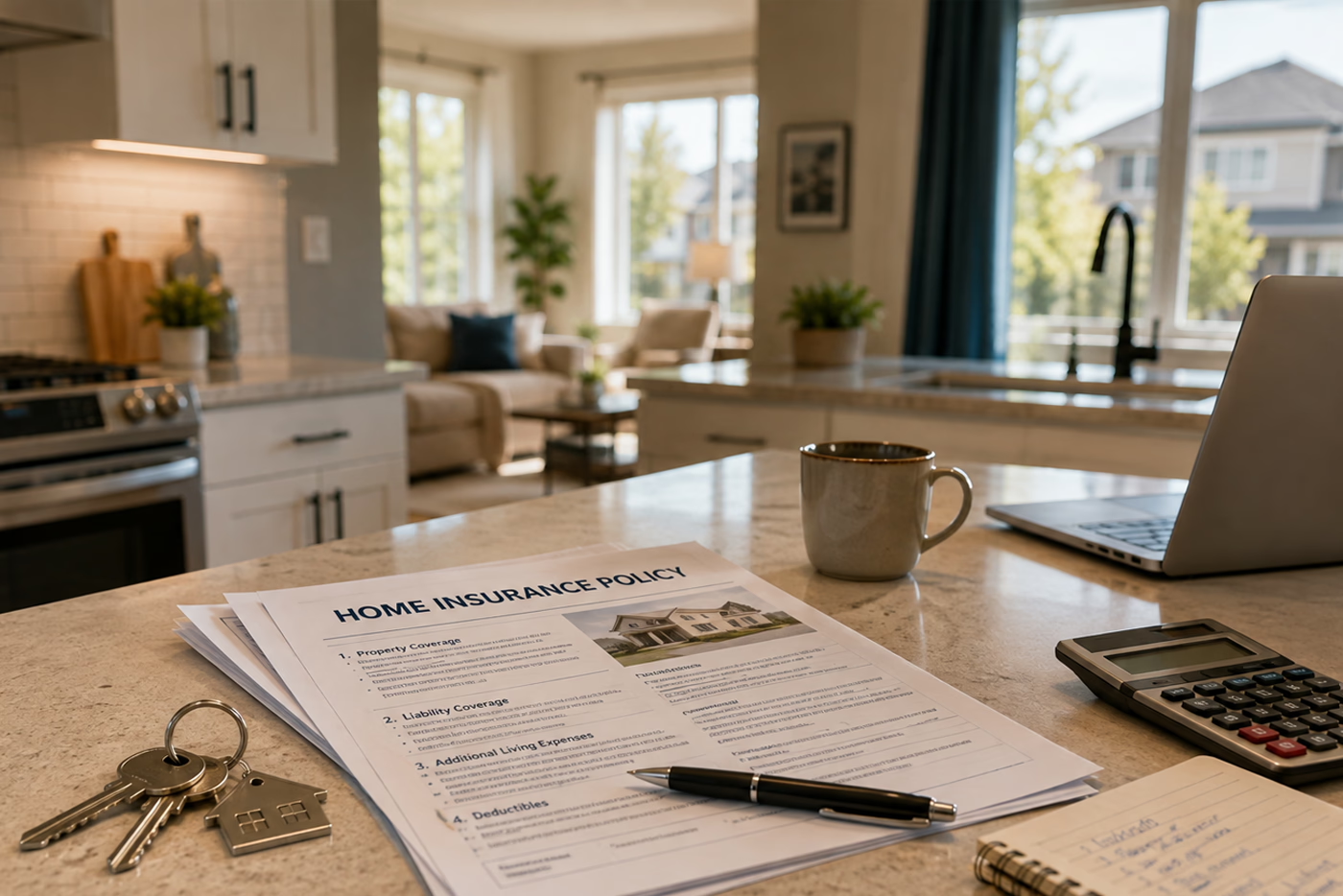
A standard homeowner's policy in Manitoba includes four main types of coverage: dwelling coverage to repair or rebuild your home after covered events like fire, wind, hail, or lightning; personal property coverage for your belongings; liability coverage (usually $1 million to $2 million) if someone is injured on your property; and additional living expenses if your home becomes uninhabitable while repairs are made. High-value items like jewellery or art may need additional riders.
A standard homeowner's insurance policy in Manitoba typically includes several types of coverage:
Dwelling coverage. This covers the cost to repair or rebuild your home if it's damaged by a covered event like fire, wind, hail, or lightning. The amount should reflect the full replacement cost of your home, not the market value.
Personal property coverage. This protects your belongings inside the home, including furniture, electronics, clothing, and appliances. There are usually limits on high-value items like jewellery, art, or collectibles, so you may need additional riders for those.
Liability coverage. If someone is injured on your property and you're found legally responsible, liability coverage helps cover legal fees and potential settlements. Most policies include $1 million to $2 million in liability coverage.
Additional living expenses. If your home becomes uninhabitable due to a covered event (say, a fire), this covers the cost of temporary accommodations, meals, and other extra expenses while your home is being repaired.
What's Not Covered?
Standard Manitoba home insurance policies typically exclude overland flooding, sewer backup, earthquakes, gradual wear and tear, home-based business equipment beyond a small threshold, and possibly liability related to certain dog breeds. Overland flood and sewer backup coverage can usually be added as endorsements, and both are strongly recommended for Manitoba homeowners.
This is just as important as what's included. Standard home insurance policies in Manitoba typically exclude:
- Overland flooding (though this can often be added as a separate endorsement)
- Sewer backup (again, available as an add-on and highly recommended)
- Earthquakes (not a major concern in Manitoba, but worth noting)
- Gradual wear and tear or lack of maintenance
- Certain dog breeds may affect your liability coverage depending on the insurer
- Home-based business equipment beyond a small threshold
The two most important add-ons for Manitoba homeowners are overland flood coverage and sewer backup coverage. I'll get into why below.
Why does flood and sewer backup coverage matter in Manitoba?
Manitoba is flat, sits at the bottom of the Red River drainage basin, and experiences regular spring flooding — yet standard policies don't cover overland flooding, so it must be added as an endorsement. Sewer backup matters just as much: heavy rains can overwhelm Winnipeg's combined sewer system in older neighbourhoods, flooding basements through floor drains, with cleanup and restoration costs easily running into the tens of thousands.
Manitoba has a complicated relationship with water. The province is flat, it sits at the bottom of the Red River drainage basin, and spring flooding is a regular occurrence. The 1997 "Flood of the Century" and the 2011 flooding along the Assiniboine River are reminders of how serious it can get.
If your property is in a flood-prone area, overland flood insurance is critical. Standard policies don't cover it. You'll need to add it as an endorsement, and in some high-risk areas, it may be expensive or difficult to obtain. The Insurance Bureau of Canada has a helpful overview of how overland flood coverage works and what it includes.
Sewer backup is equally important. Heavy rains can overwhelm Winnipeg's combined sewer system in older neighbourhoods, causing basement flooding through floor drains. This happens more often than most people expect, and the cost of cleanup and restoration can easily run into the tens of thousands.
When you're shopping for insurance, ask specifically about both of these coverages and get clear answers about limits and deductibles.
How Much Does Home Insurance Cost in Manitoba?
Home insurance premiums in Manitoba vary significantly based on several factors, but you can expect to pay roughly $1,200 to $2,500 per year for a typical single-family home in Winnipeg and the surrounding areas. Some properties will be higher, some lower.
The premium you pay depends on:
Your home's age and condition. Older homes, particularly those with original electrical panels, plumbing, or roofing, tend to cost more to insure. If you've upgraded the electrical system, plumbing, and roof, make sure your insurer knows.
The replacement cost of the home. A larger home with higher-end finishes will cost more to insure because it costs more to rebuild. Your insurer will estimate the replacement cost based on the home's size, construction type, and features.
Your location. Homes in flood-prone areas or areas with higher claim rates will have higher premiums. Proximity to a fire station and fire hydrant can also affect your rate.
Your claims history. If you've made previous claims, your premium may be higher. Multiple claims in a short period can significantly increase your costs or make it harder to get coverage.
Your deductible. A higher deductible (the amount you pay out of pocket before insurance kicks in) means a lower premium. Most homeowners choose a deductible between $500 and $2,500.
Security features. A monitored alarm system, smoke detectors, and a sump pump with battery backup can sometimes earn you discounts.
What's the difference between replacement cost and actual cash value?
Replacement cost coverage pays to repair or replace damaged property with new items of similar quality — if fire destroys your roof, you get a new roof at today's prices. Actual cash value pays only the depreciated value, so a destroyed 15-year-old roof gets you what a 15-year-old roof is worth. Replacement cost coverage costs more, but the premium difference is usually modest compared to the potential coverage gap when you make a claim.
This is an important distinction when choosing your policy:
Replacement cost coverage pays to repair or replace damaged property with new items of similar quality. If a fire destroys your roof, you get a new roof at today's prices.
Actual cash value coverage pays the depreciated value of the damaged property. If your 15-year-old roof is destroyed, you'd only receive what a 15-year-old roof is worth, not what a new one costs.
Replacement cost coverage is more expensive, but it's what I'd recommend for most homeowners. The difference in premium is usually modest compared to the potential gap in coverage when you need to make a claim.
How do you get good coverage at a fair price?
Bundle your home and auto policies for a discount, raise your deductible if you can comfortably absorb a small loss, and install a sump pump with battery backup, which many insurers reward with lower premiums. Review your policy annually so it reflects renovations or downsized belongings, ask about loyalty and claims-free discounts, and shop for competitive quotes every two to three years to make sure you're not overpaying.
Bundle your policies. Most insurers offer a discount if you bundle your home insurance with auto insurance. In Manitoba, your basic auto insurance is through Manitoba Public Insurance (MPI), but you can bundle your home policy with your optional MPI extension coverage or with a private insurer for your home and any additional auto coverage.
Review your policy annually. Your coverage needs change over time. If you've renovated, added a deck, or finished your basement, your replacement cost has gone up and your policy should reflect that. On the flip side, if your kids have moved out and you've downsized your belongings, you might be able to reduce your personal property coverage.
Increase your deductible if you can absorb a small loss. Moving from a $500 deductible to a $1,000 or $2,000 deductible can meaningfully reduce your premium. Just make sure you have that amount readily available in savings.
Install a sump pump with battery backup. If you have a basement, this reduces your flood risk and many insurers will give you a discount for having one. It also provides real peace of mind during heavy rain events.
Ask about loyalty and claims-free discounts. Staying with the same insurer for several years without making a claim can qualify you for significant discounts. Ask your broker or agent what's available.
Shop around every few years. Insurance premiums can vary widely between companies. Even if you're happy with your current insurer, it's worth getting competitive quotes every two to three years to make sure you're not overpaying.
Should you use an insurance broker or go direct?
For most people, working with a local independent broker is the better approach. Brokers represent multiple insurance companies, shop your coverage across several providers for the best combination of price and protection, understand Manitoba-specific risks, and advocate for you if you need to make a claim. Going direct works too — companies like Winnipeg-headquartered Wawanesa offer online quoting tools — just make sure you're comparing equivalent coverage between quotes.
In Manitoba, you can buy home insurance directly from a company (like through an online portal) or through an independent insurance broker.
A broker represents multiple insurance companies and can shop your coverage across several providers to find you the best combination of coverage and price. They also advocate for you if you need to make a claim. For most people, working with a local broker is a good approach because they understand Manitoba-specific risks and can make sure you're properly covered.
If you prefer to go direct, companies like Wawanesa (which is headquartered right here in Winnipeg) and other national insurers offer online quoting tools. Just make sure you're comparing equivalent coverage when looking at different quotes.
Which types of properties need special insurance considerations?
Four property types need extra attention: older homes in core neighbourhoods like Wolseley or the North End, which may have knob-and-tube wiring or aging foundations that raise premiums; rural properties, where distance from a fire station and well or septic systems affect rates; condos, where you need your own unit policy to fill gaps in the corporation's master coverage; and homes with rental suites, which must be disclosed or your policy could be voided entirely.
Older homes in Winnipeg's core neighbourhoods. Properties in Wolseley, West Broadway, the North End, or other established areas may have knob-and-tube wiring, galvanized plumbing, or aging foundations. Insurers will want to know about these, and you may face higher premiums or requirements to upgrade before they'll insure the property. A home inspection before purchase is essential.
Rural properties. If you're buying outside the city in areas like the RM of Springfield, RM of East St. Paul, or further out toward Steinbach or Portage la Prairie, distance from a fire station can increase your premium. Well and septic systems (instead of municipal water and sewer) may also be factors.
Condos and townhomes. If you're buying a condo, the condo corporation will have a master insurance policy covering the building's structure and common areas. You'll still need your own policy (often called condo or tenant-style insurance) to cover your personal belongings, upgrades inside your unit, and personal liability. Make sure there aren't coverage gaps between the condo corporation's policy and yours.
Homes with rental suites. If the property has a legal or illegal secondary suite, you need to disclose this to your insurer. Having tenants in part of your home affects your coverage, and failing to disclose it can void your policy entirely.
When do you need home insurance in place when buying a home?
When you're buying a home, you'll need to have home insurance in place before your closing date. Your mortgage lender will require proof of insurance as a condition of releasing the mortgage funds.
Here's a practical checklist:
- Start getting quotes at least two to three weeks before closing
- Make sure the policy effective date matches your closing date
- Confirm your coverage amounts with your lender
- Add overland flood and sewer backup coverage
- Provide your lawyer and lender with the insurance certificate
Don't leave this to the last minute. If there's an issue with insuring the property (maybe due to an old electrical panel or proximity to a flood zone), you'll want time to sort it out before closing day arrives.
Home insurance isn't the most exciting part of buying a home, but it's one of the most important. Get the right coverage, review it regularly, and you'll have one less thing to worry about.
...