
How to Handle Foundation Issues in Older Winnipeg Homes
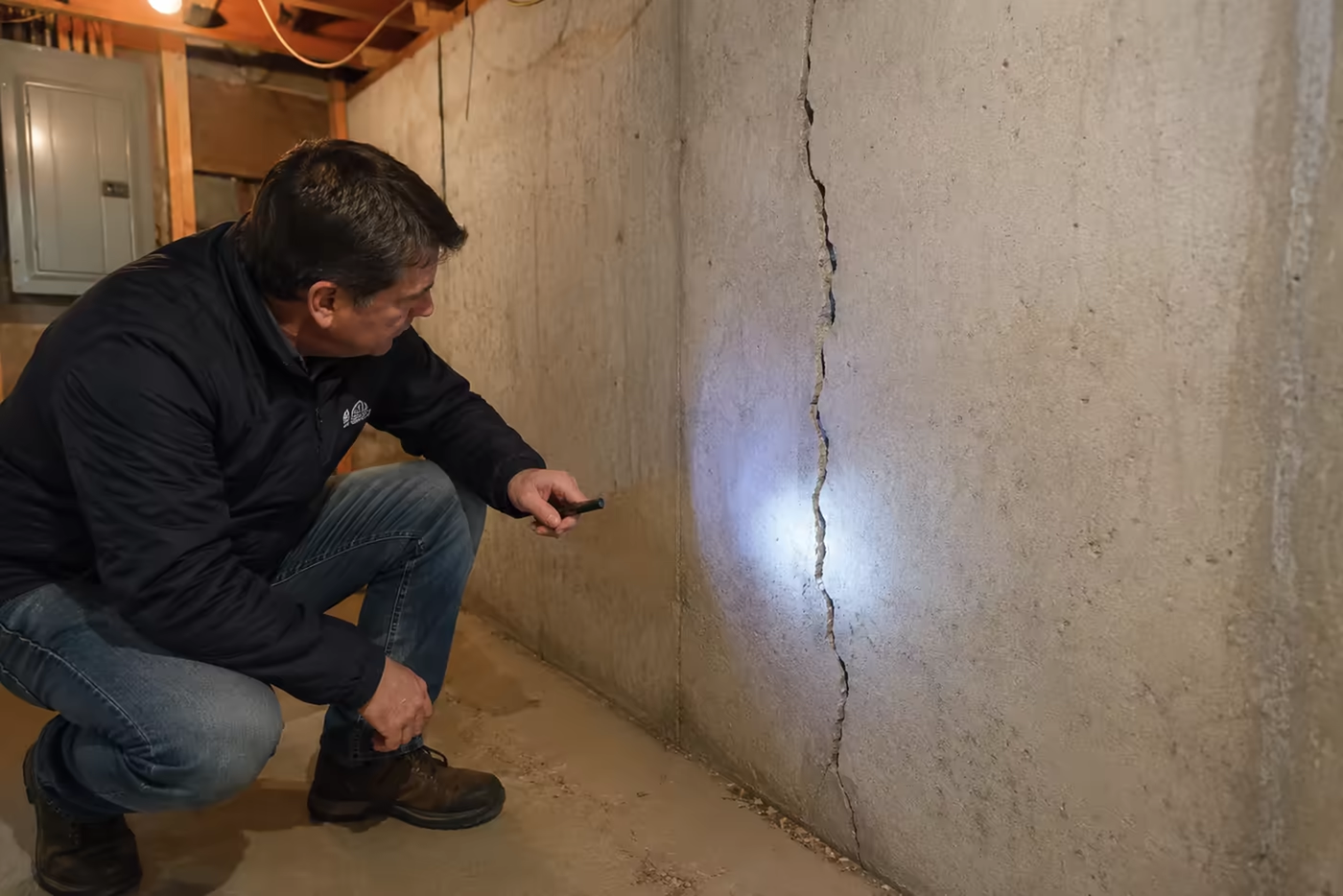
Winnipeg has a lot of beautiful older homes. Character neighbourhoods like Wolseley, River Heights, Crescentwood, and parts of St. Boniface and the North End are full of houses built anywhere from the early 1900s through the 1960s. These homes have charm, solid craftsmanship, and often more space than newer builds. They also frequently come with foundation issues.
That's not a reason to avoid older homes. It's just something you need to understand. Foundation problems in Winnipeg are incredibly common, and they range from minor cosmetic cracks to serious structural concerns. Knowing the difference, and knowing when to call a professional, can save you a lot of money and stress.
Why are Winnipeg homes prone to foundation problems?
Winnipeg sits on heavy clay soil — locals call it "gumbo" — that expands when it absorbs water and contracts when it dries, putting constant seasonal pressure on foundation walls. Manitoba's extreme freeze-thaw cycles add stress dozens of times a year as water in the soil freezes and pushes against the foundation. Older homes are especially vulnerable because rubble stone and concrete block foundations don't hold up to these forces as well as modern poured concrete.
It comes down to the soil. Winnipeg sits on heavy clay soil, sometimes called "gumbo" by locals. Clay soil expands when it absorbs water and contracts when it dries out. This seasonal movement puts constant pressure on foundations, pushing walls inward during wet periods and allowing them to settle unevenly during dry spells.
Add in Manitoba's extreme freeze-thaw cycles. Water in the soil around and under your foundation freezes, expands, and pushes against the walls. Then it thaws, the soil contracts, and things shift again. This happens dozens of times every year. Over decades, the cumulative effect takes a toll.
Older homes are especially vulnerable because they were often built with construction methods and materials that don't hold up as well to these forces.
- Rubble stone foundations (common in homes built before 1920) are made of irregularly shaped stones held together with morite mortar. They were never designed to be waterproof, and the mortar deteriorates over time.
- Concrete block foundations (common from the 1920s through the 1960s) can crack and bow under lateral soil pressure.
- Poured concrete foundations (more common from the 1960s onward) are generally stronger but still susceptible to cracking from soil movement.
What are the signs of foundation problems?
In the basement, watch for horizontal, vertical, or stair-step cracks, walls that bow or lean inward, water seepage, efflorescence (white mineral deposits), or a musty smell. Elsewhere in the house, sticking doors and windows, drywall cracks above doorframes, sloping floors, and cracks in exterior brick or stucco can all point to foundation movement. Horizontal cracks and stair-step cracks in concrete block walls are the biggest red flags.
Some signs are obvious. Others are easy to miss if you don't know what to look for.
In the basement:
- Horizontal, vertical, or stair-step cracks in the foundation walls
- Walls that are bowing, leaning, or bulging inward
- Water seepage, staining, or efflorescence (white mineral deposits) on the walls
- A musty smell or visible mould
- Gaps between the top of the foundation wall and the sill plate
Throughout the house:
- Doors and windows that stick or won't close properly
- Cracks in interior drywall, especially above doorframes and at corners
- Uneven or sloping floors
- Gaps between walls and the floor or ceiling
- Cracks in exterior brick or stucco
Not every crack is a crisis. Hairline cracks in poured concrete are often just shrinkage cracks and don't indicate a structural issue. But certain patterns are red flags. Horizontal cracks in block or concrete walls suggest lateral pressure from the soil and can indicate the wall is being pushed inward. Stair-step cracks in concrete block walls often mean the foundation is settling unevenly.
When should you worry about foundation cracks?
Hairline vertical cracks in poured concrete are usually harmless shrinkage cracks. Vertical cracks wider than 1/8 inch, cracks showing signs of movement, or minor seepage during heavy rain are worth monitoring. Call a professional for any horizontal cracking, visibly bowing or leaning walls, cracks wider than 1/4 inch, recurring water entry, uneven settling, or cracks that are actively growing — a structural engineer or foundation contractor can tell you whether it needs repair, monitoring, or immediate attention.
Generally not a big concern:
- Hairline vertical cracks in poured concrete (common shrinkage cracks)
- Minor efflorescence without active water entry
- Small cracks that haven't changed in size over time
Worth monitoring:
- Vertical cracks wider than 1/8 inch
- Cracks that show any signs of movement (you can mark them with tape or pencil and check over several months)
- Minor water seepage during heavy rain or spring thaw
Call a professional:
- Any horizontal cracking
- Walls that are visibly bowing or leaning
- Cracks wider than 1/4 inch
- Significant or recurring water entry
- Uneven settling (one side of the house noticeably lower than the other)
- Cracks that are actively growing
When in doubt, get it assessed. A structural engineer or foundation contractor can usually tell you exactly what you're dealing with and whether it needs repair, monitoring, or immediate attention.
How are foundations repaired in Winnipeg?
Repairs range widely in cost and scope. Crack injection seals leaking non-structural cracks for $300 to $800 per crack, interior waterproofing with a drainage system and sump pump runs $5,000 to $15,000, and exterior waterproofing with a membrane and weeping tile costs $10,000 to $30,000 or more. Bowing walls can be stabilized with carbon fibre straps, steel beams, or anchors, while serious settling may require underpinning at $30,000 or more.
The repair approach depends on what's wrong and how serious it is.
Crack injection. For non-structural cracks in poured concrete that are leaking water, epoxy or polyurethane injection is a common and relatively affordable fix. The material is injected directly into the crack to seal it. Cost is typically $300 to $800 per crack.
Exterior waterproofing. This involves excavating around the foundation, applying a waterproof membrane to the exterior wall, and installing or replacing weeping tile (drainage tile) around the footing. It's effective but expensive and disruptive, often $10,000 to $30,000 or more depending on the scope. However, it addresses the root cause of water entry rather than just treating symptoms.
Interior waterproofing. A less invasive option involves installing an interior drainage system along the base of the foundation walls, connected to a sump pump. It doesn't stop water from entering the wall but manages it effectively. Costs typically range from $5,000 to $15,000.
Wall reinforcement. For bowing or buckling walls, carbon fibre straps, steel I-beams, or wall anchors can be used to stabilize the wall and prevent further movement. Carbon fibre straps are less invasive and work well for minor to moderate bowing. Steel beams or anchors may be needed for more severe cases. Costs vary widely depending on the method and extent of the problem.
Underpinning. For serious settling issues, underpinning involves extending the foundation deeper into more stable soil. This is major structural work and is usually only necessary when the foundation is failing. It's expensive (often $30,000 or more) but sometimes it's the only real solution.
Parging and mortar repair. For older rubble stone or block foundations, repointing deteriorated mortar and applying a fresh parge coat can extend the life of the foundation and reduce water entry. This is more of a maintenance repair than a structural one.
Should you buy a home with foundation issues?
Foundation issues alone aren't a reason to walk away — they're something to factor into the deal. Always get a home inspection on older homes, and if concerns are flagged, a structural engineer's assessment ($500 to $1,000) will tell you exactly what's wrong and what repairs would cost, giving you real negotiating power. If a home needs $15,000 in foundation work, reflect that in your offer price or negotiate it as a condition of sale.
If you're buying an older home in Winnipeg, foundation issues should be on your radar from the start. Here's my advice.
Always get a home inspection. A qualified home inspector will identify visible foundation issues and recommend further assessment where needed. Don't skip this step, especially on homes built before 1970.
Consider a structural engineer. If the home inspector flags foundation concerns, a structural engineer's assessment (typically $500 to $1,000) is money well spent. They can tell you exactly what's happening, whether it's serious, and what repairs would cost. This information gives you real negotiating power.
Factor repair costs into your offer. If a home needs $15,000 in foundation work, that should be reflected in your offer price or negotiated as a condition of sale. An informed buyer doesn't walk away from foundation issues. They factor them into the deal.
Ask about history. Has the seller had any foundation work done? Is there a history of basement flooding? Any warranty documentation from previous repairs? Sellers are required to disclose known material defects in Manitoba, but asking specific questions can surface information that might not be in a standard disclosure.
Check the drainage. During your viewing, look at the grading around the home. Is soil sloping toward or away from the foundation? Are gutters and downspouts directing water away from the house? Poor drainage is the number one contributor to foundation problems in Winnipeg, and it's also the easiest thing to fix.
How do foundation issues affect selling your home?
Sellers in Manitoba must disclose known foundation defects on the Property Disclosure Statement, and failing to do so creates serious legal liability. Getting a professional assessment before listing and sharing that documentation shows transparency — a buyer who knows exactly what they're dealing with is more likely to make an offer than one who suspects problems but doesn't know the extent. Simple fixes like grading, gutter repairs, and sealing minor cracks also improve how buyers perceive the home.
If you're selling a home with known foundation issues, disclosure is not optional. Manitoba's Property Disclosure Statement asks sellers to identify known defects, and failing to disclose a known foundation problem can create serious legal liability.
The smarter approach is to address what you can before listing. Even if you can't afford a full repair, getting a professional assessment and providing that documentation to buyers shows transparency and reduces their uncertainty. A buyer who knows exactly what they're dealing with is more likely to make an offer than one who suspects problems but doesn't know the extent.
Simple things like fixing grading, repairing gutters, and sealing minor cracks can make a meaningful difference in how buyers perceive the home.
How do you prevent foundation problems?
You can't eliminate foundation movement in Winnipeg's clay soil, but you can minimize the damage. Keep soil sloping away from the foundation at a minimum of 1 inch per foot for the first 6 feet, keep gutters clean with downspouts extended well away from the house, and avoid planting large trees close to the foundation. During prolonged dry spells, run a soaker hose around the perimeter to keep soil moisture consistent, and mark and monitor existing cracks for growth.
You can't eliminate foundation movement in Winnipeg's clay soil, but you can minimize the damage.
- Maintain proper grading. Soil should slope away from your foundation at a minimum of 1 inch per foot for the first 6 feet.
- Keep gutters clean and ensure downspouts extend well away from the house.
- Avoid planting large trees too close to the foundation. Tree roots draw moisture out of clay soil, which causes it to shrink and can lead to settling.
- Water your foundation during dry spells. This might sound strange, but in prolonged dry weather, the clay soil around your foundation can shrink dramatically, pulling away from the walls. Running a soaker hose around the perimeter for 30 minutes a couple of times a week can help maintain consistent soil moisture.
- Monitor existing cracks. Mark them, measure them, and track whether they're growing. A crack that hasn't changed in five years is very different from one that's gotten wider over the past six months.
It's Part of Owning an Older Home Here
Foundation issues are a reality of homeownership in Winnipeg, especially in older neighbourhoods. They shouldn't scare you away from buying a character home, but they should be something you go in with your eyes open about. Understanding the problem, knowing the repair options, and budgeting accordingly puts you in control.
If you're considering buying or selling an older home and want to talk through how foundation condition might affect value, feel free to get in touch.
...